Are you planning to buy property in Budapest, but terrified of finding hidden structural damages, outdated wiring, or moisture issues beneath a fresh coat of paint? Purchasing real estate abroad is a major financial milestone, yet many international buyers navigate the Hungarian market blindly. Most foreign investors ask the same critical questions: What to check before buying an apartment in Budapest? What are the hidden costs of old Budapest apartments? To save money, some rely on unqualified handymen or seller assurances, missing the core issue: Is an independent building inspection worth it in Hungary? Absolutely. If you want to know why a technical due diligence is essential and who provides certified engineering reports for property purchases in Budapest, this guide is tailored for you. Don’t let your dream investment turn into a financial nightmare!
Property Due Diligence in Budapest: Why Risk Millions on Your Investmentor What to check before buying an apartment in Budapest?
Investing in Budapest real estate is a highly attractive opportunity. From classic “nagypolgári” apartments in District V to modern developments along the Danube, the potential for strong rental yields and capital appreciation is clear. However, buying property in a foreign country comes with significant risks—especially when emotional appeal and polished staging obscure what lies beneath the surface.
In the era of professional home staging, even a structurally compromised or poorly renovated apartment can look like a luxury turnkey property. Critical issues in older classic buildings or poorly executed renovations are often invisible to the untrained eye. Conducting a professional property due diligence in Budapest before finalizing any deal is essential for protecting your capital.
What Is Property Technical Due Diligence?
Technical due diligence is a comprehensive, engineering-focused inspection carried out by an independent, certified expert. Unlike standard real estate viewings, this assessment covers the property from sub-floors to ceiling beams. The objective is not to evaluate interior design, but to audit load-bearing structures, moisture barriers, electrical systems, and historical building integrity.
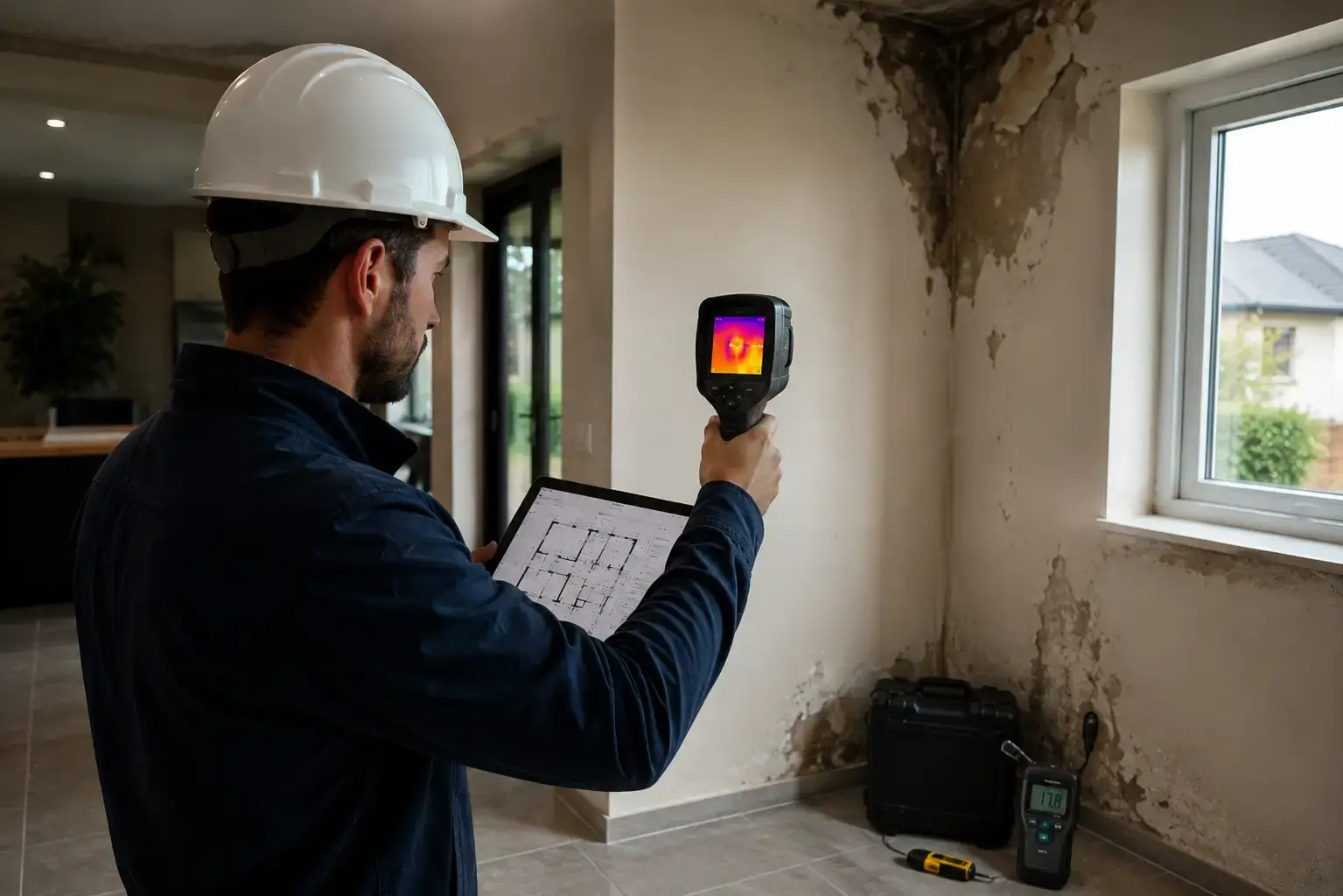
An experienced engineer uses specialized diagnostic equipment to assess what cannot be seen with the naked eye. They evaluate structural cracks, trace water infiltration, inspect historical masonry or timber floors, and reveal issues that sellers may not disclose—or might not even be aware of. You receive an objective, written technical report that provides full transparency before you commit funds.
When Should You Conduct a Technical Inspection?
The ideal time for technical due diligence is before making an official purchase offer, or at the latest, prior to signing a preliminary contract or paying an earnest money deposit.
In Hungary, money paid as a deposit (foglaló) is legally binding and typically non-refundable if the buyer pulls out. Discovering severe roof leaks, sagging floor joists, or hazardous electrical wiring after signing means choosing between forfeiting a substantial deposit or funding unbudgeted, multimillion-HUF repairs.
If you are operating in a fast-moving market, ensure your lawyer includes a technical contingency clause in the preliminary agreement, specifying that the sale is subject to a satisfactory engineering assessment.
Is It Worth the Cost? ROI and Expense Breakdown
A common hesitation among international buyers is adding another line item to their budget alongside legal fees, property transfer taxes, and translation services.
Viewing a technical assessment as an extra cost is a major miscalculation. An engineering inspection typically costs a tiny fraction of the property value. Conversely, uncovering structural defects after closing can lead to unexpected repair costs reaching tens of thousands of euros.
An independent survey delivers ROI through two main outcomes:
The property is structurally sound: You proceed with absolute confidence, knowing your capital is secure.
Defects are identified: Armed with an official engineering report, you gain powerful price-negotiation leverage. You can negotiate a price reduction corresponding to the estimated repair costs or require the seller to fix the issues before closing. If the defects are severe, you can walk away safely without losing your deposit.
What Does the Inspection Cover? Common Hidden Issues in Budapest Real Estate
Budapest’s historic architecture presents unique engineering challenges that foreign buyers rarely encounter in modern markets:
Sub-Floor & Joist Integrity: Many pre-war apartments utilize wooden beam floor structures (borotvagerendás/fagerendás födém). Rot, insect damage, or unauthorized modifications can compromise structural stability.
Moisture Infiltration & Rising Damp: Ground-floor units and basement-adjacent apartments frequently suffer from failing damp-proof courses, causing peeling plaster and long-term health risks.
Outdated Electrical & Plumbing Systems: Old aluminum wiring (MMfal) and lead pipes remain common behind newly painted walls, posing fire hazards and water damage risks.
Unpermitted Layout Changes: In Hungary, removing load-bearing walls or converting spaces without proper permits can lead to severe legal penalties and structural risks.
Thermal Efficiency & Heating Systems: Inefficient heating setups (konvektor gas heaters or old boilers) severely impact energy ratings and rental yields.
Who Needs This Service?
Foreign & Expat Investors: Buyers navigating the local market without fluency in Hungarian or familiarity with local building codes.
Buyers of Renovated/Flipped Apartments: High-end finishes often conceal cheap materials, quick fixes, and unpermitted structural alterations.
Purchasers of Pre-1940 Historic Flats: Older properties require specialized knowledge of historical construction methods and materials.
Portfolio & Commercial Investors: Buyers requiring precise capital expenditure (CapEx) modeling to calculate accurate net rental yields (ROI).
The Danger of Unqualified “Handymen” vs. Certified Engineers
A common mistake among international buyers is hiring a general handyman or relying on an informal contact recommended by a broker or seller.
Why is this an unacceptable risk?
Lack of Formal Certification & Legal Responsibility: A general contractor or handyman lacks formal training in structural engineering, building physics, and legal compliance. In Hungary, official technical evaluations must be performed by an engineer registered with the Hungarian Chamber of Engineers (Magyar Mérnöki Kamara).
Absence of Professional Diagnostic Tools: A casual inspector relies on visual inspection alone. A qualified engineer utilizes high-precision instruments, including thermal imaging cameras for heat-loss analysis, professional moisture meters, and laser levels.
Impartiality & Accountability: Certified engineers adhere to a strict ethical code and provide an unbiased, official report backed by professional liability. An informal contact offers no legal recourse if major structural defects are missed.
By utilizing my professional property due diligence in Budapest service, you receive an authoritative report that protects your investment, strengthens your legal position, and provides absolute clarity throughout the acquisition process.
Final Thoughts: Protect Your Capital in the Hungarian Market
Buying real estate in Budapest should be a lucrative and rewarding venture, not a source of unexpected financial distress. Independent technical due diligence acts as your primary safeguard against hidden liabilities and overpriced structural mistakes.
Avoid relying on informal advice or seller assurances. Entrust your property acquisition to a certified, English-speaking engineer with verified credentials and specialized diagnostic equipment.
Property Technical Due Diligence in Budapest: Avoid Unforeseen Multimillion-HUF Risks!
Entrust the inspection of your prospective real estate investment to an independent, certified engineer and safeguard your capital from unexpected, highly expensive structural surprises.
If you recognize the value of having a professional on your side before committing funds, explore our comprehensive property due diligence in Budapest service—we provide the clarity, compliance, and actionable engineering data you need to invest with absolute confidence.
PREMIUM DUE DILIGENCE - REGULATORY & COMPLIANCE AUDIT
Pre-Purchase Property Inspection & Regulatory Audit by the property inspector
My mission is to safeguard international investors and property buyers from hidden structural defects, substandard renovations, and overpriced repair liabilities in the Hungarian real estate market. As an independent engineering expert utilizing advanced diagnostic instruments and digital tracking systems, I provide objective technical clarity to ensure your real estate acquisition in Budapest represents true value and a secure financial investment.
Qualifications & Certifications:
- M.Sc. Civil Engineer
- Member of the Hungarian Chamber of Engineers (MMK)
- Licensed Technical Supervisor (MV-É) and Technical Inspector (ME-É)